Top 10 Lighting Fixtures Needed for a Theater Stage?

Time:2026-10-15 Author:Liam
0%

A theater stage is not lit by brightness alone. It is shaped by direction, color, movement, texture, and control. From a narrow spotlight on a performer’s face to a soft wash across a painted set, every fixture must support the story and the venue’s practical limits.

So, what lighting fixtures are needed for a theater stage? The answer usually includes profile fixtures, Fresnels, ellipsoidals, PARs, moving lights, cyc lights, followspots, LED battens, practical fixtures, and lighting control equipment. Each choice affects focus time, power use, maintenance, and visual consistency. The U.S. Department of Energy’s solid-state lighting reports identify LED technology as a major improvement in controllability, efficiency, and operating life. Those advantages matter in theaters, where fixtures may run through long rehearsals and repeated performances. However, efficiency does not automatically create good design.

Professional guidance from the Illuminating Engineering Society and ESTA emphasizes controlled distribution, safe installation, color performance, and repeatable operation. A profile fixture with clean shutters can shape a doorway precisely. A Fresnel can create a softer pool around an actor’s shoulders. Meanwhile, an LED batten can color a full backdrop without filling the stage with excessive heat. Small venues may not need every fixture listed here. Large productions may require several versions of each type. There is no perfect ten-fixture formula. I may favor flexibility too heavily, because budget and available rigging often change the decision. This guide examines the essential options, their strengths, and the compromises behind each selection.
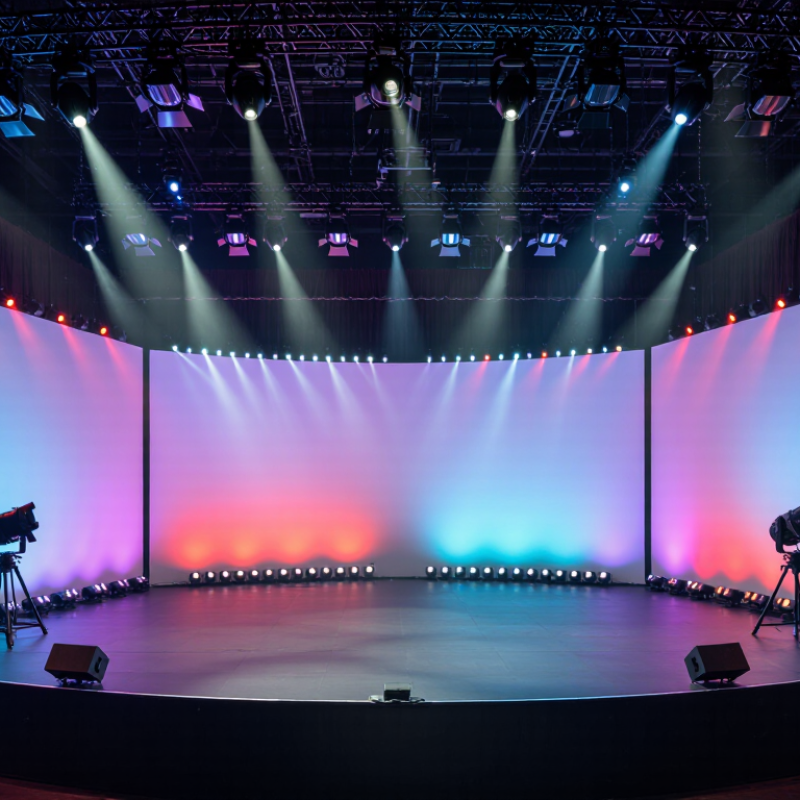
Top 10 Lighting Fixtures Needed for a Theater Stage?

Stage Lighting Basics: Roles, Beam Types, and Control Methods

Top 10 Lighting Fixtures Needed for a Theater Stage?

Stage Lighting Basics: Roles, Beam Types, and Control Methods

A reliable stage often begins with ten fixture types: Fresnels, profile spotlights, PAR fixtures, moving heads, wash lights, followspots, strip lights, beam lights, practical lamps, and strobes. Each fixture serves a different visual role. Fresnels create soft pools for faces and scenes. Profile spotlights produce sharp edges, gobos, and controlled specials. PAR fixtures provide strong color washes across large areas. Moving heads add changing direction, color, and movement. Followspots keep attention on a performer, but they demand a skilled operator.

Beam shape matters as much as fixture choice. A narrow beam isolates one actor, while a wide beam covers several performers. Soft edges blend naturally on a stage. Hard edges define architectural details or dramatic shadows. Backlight separates bodies from dark scenery. Front light reveals expression, although excessive front light can flatten the entire scene. I still find this balance difficult in small venues.

Tips: Start with key, fill, and backlight positions. Then add texture or color carefully. Use a console to build cues, groups, fades, and intensity limits. DMX control can connect fixtures, dimmers, and effects through planned channels. Test every cue from the audience viewpoint. A beam may look beautiful backstage but miss the actor completely. Leave room for adjustment; real stages rarely behave exactly like the lighting plan.

Key Light Fixtures for Clear Performer Visibility

Top 10 Lighting Fixtures Needed for a Theater Stage?

Key Light Fixtures for Clear Performer Visibility

Clear performer visibility begins with reliable key lighting. In a small black-box theater, I usually start with LED Fresnels because their soft beam flatters faces and covers several actors evenly. Their adjustable beam also helps when blocking changes during rehearsal. Profile fixtures provide sharper control. They can isolate a speaker, shape a doorway, or create a clean pool on the floor. A shuttered beam prevents unwanted spill across scenery and costumes.

PAR fixtures add broad, energetic coverage for entrances, dance scenes, and fast transitions. Followspots remain valuable when one performer moves beyond the main acting area. They require trained operators, though. A moving-head fixture can support dynamic scenes, but movement should never distract from facial expression. Soft LED panels, strip fixtures, and low-angle units help reduce harsh shadows from overhead positions. Practical lamps can make a room feel believable while supporting the main exposure.

I have sometimes trusted bright fixtures too quickly. That was a mistake. Excessive intensity can flatten faces and erase texture. I now check skin tones from the audience, not only from the control desk. Front light should usually arrive from two balanced angles, while side light preserves body shape. Backlight separates performers from dark scenery, especially during low-contrast costumes. Every fixture needs careful focus, color control, and a tested backup plan. Small adjustments matter. A five-degree tilt can change whether an actor’s eyes remain visible.

Wash and Color Fixtures for Shaping the Stage Atmosphere

Top 10 Lighting Fixtures Needed for a Theater Stage?

Wash fixtures create the first emotional layer onstage. A warm wash can suggest late afternoon, while cool blue light can make a room feel distant. A practical rig often includes Fresnel fixtures, profile spotlights, LED wash units, PAR fixtures, strip lights, cyc lights, moving washes, moving profiles, followspots, and soft lights. Each fixture has a different beam shape and control range.

Fresnels produce gentle edges and flattering coverage for actors. Profile spotlights add sharp focus for doorways, tables, or isolated performers. LED wash fixtures help build color quickly across wide areas. Strip and cyc fixtures spread smooth color across backdrops, but uneven spacing can create visible patches. I usually test them from the audience, not only from the control desk. The view changes everything.

Color mixing is useful, though it does not solve every problem. Some fixtures produce muddy amber tones or weak skin color at low intensity. A simple color filter can sometimes look more natural. Moving fixtures add flexibility, but their movement may distract during quiet scenes. I have also seen too many saturated colors flatten a carefully designed set. Light needs restraint. Small adjustments matter. A good lighting plan leaves room for correction during rehearsal. Temperature, haze, scenery, and costumes can change the result unexpectedly.

Profile and Moving Fixtures for Precision and Dynamic Effects

Profile fixtures and moving fixtures are essential in a practical ten-fixture theater package. Other useful tools include Fresnels, wash lights, PAR units, cyc lights, followspots, strobes, and practical lamps. Each one serves a distinct visual purpose.

Profile fixtures create controlled, exact beams. Their shutters can shape light around a performer, doorway, or table. A gobo adds texture, such as window frames across a stage floor. A sharp profile is valuable during dialogue because it limits spill onto scenery and nearby actors. During focus sessions, I check the beam from several audience seats. The edge may look clean from the console but soft from the balcony.

Moving fixtures provide speed and visual change. Pan and tilt movements can follow a dancer or sweep through haze. Color wheels, zoom systems, and rotating gobos support quick transitions between scenes. However, movement should follow the story, not distract from it. I once programmed a fast chase that looked impressive but weakened a quiet moment. The cue needed restraint.

Reliable operation depends on careful preparation. Set precise addresses, label every unit, and test backup cues before rehearsal. Clean lenses and confirm safe mounting positions. Small calibration errors matter. A beam landing fifteen centimeters away can miss a face or flatten a set. Profile fixtures often need tighter focus, while moving fixtures require enough clearance for full travel. The best results come from measured choices, repeated checks, and a willingness to revise.

Practical Factors for Selecting and Positioning Theater Lights

Top 10 Lighting Fixtures Needed for a Theater Stage

A practical stage lighting system begins with the right fixtures, not the largest equipment list. Useful choices include ellipsoidal spotlights, Fresnel lights, PAR fixtures, profile spotlights, moving heads, followspots, cyc lights, strip lights, LED wash lights, and practical lamps. Each fixture serves a different visual task. Ellipsoidals create sharp areas and patterned shadows. Fresnels provide softer edges for actors and scenic spaces. PARs deliver broad color coverage, while cyc lights help even out backdrops. Moving heads add flexibility, but they can distract from performers when used without restraint.

Selection should follow the venue, set design, power capacity, and audience distance. I usually test a fixture from the intended mounting position before approving it. A light may appear bright on the floor but lose clarity across a deep stage. Front lights should reveal faces without flattening them. Side lights shape bodies and movement. Backlights separate performers from dark scenery. Followspots need clear sightlines and trained operators. Avoid placing every light at the same angle. That habit creates an empty, television-like image. I have made that mistake before.

Tips: Use a simple lighting plan before installation. Mark beam angles on the floor with tape. Check shadows from set pieces, curtains, and microphones. Keep spare circuits available for changes. Dimmer noise matters in quiet scenes. Color choices should support skin tones and materials, not merely look dramatic. Walk through the stage during rehearsal, because a plan can miss real movement. Small adjustments often improve the image more than expensive fixtures.

Top 10 Lighting Fixtures Needed for a Theater Stage? - Practical Factors for Selecting and Positioning Theater Lights
No. Lighting Fixture Primary Function Typical Position Beam and Coverage Useful Features Selection and Positioning Factors
1 Ellipsoidal Reflector Spotlight Creates a controlled, sharp-edged pool of light for actors, scenic details, doors, windows, and stage areas. Front-of-house positions, box booms, or overhead electrics. Usually narrow to medium beam angles; produces a defined field with optional shutters and pattern projection. Shutters Iris Pattern holder Choose the beam angle according to the throw distance and coverage area. Aim from an approximately 30–45-degree vertical angle when possible to provide facial modeling without excessive shadows.
2 Fresnel Spotlight Provides soft-edged, adjustable light for general area coverage, transitions, and natural-looking stage illumination. Overhead electrics, front-of-house, or side positions. Soft beam that can be adjusted from spot to flood; suitable for overlapping washes. Soft edge Spot-to-flood adjustment Barn doors Use multiple fixtures from different angles to reduce harsh shadows. Allow sufficient spacing between units so adjacent pools blend smoothly without creating bright gaps.
3 Profile LED Spotlight Delivers precise, controllable illumination with electronic dimming and color adjustment for key lighting and special areas. Front-of-house, overhead electrics, side ladders, or balcony rails. Fixed or zoomable beam, depending on the fixture; typically sharper than a Fresnel. Variable white Color mixing Low heat output Check color rendering, fan noise, dimming behavior, and the control system before selection. Position units to cover faces evenly while avoiding direct glare into the audience.
4 PAR Can or LED PAR Creates broad washes of color for backgrounds, scenery, musical numbers, and high-energy stage looks. Upstage and downstage electrics, side booms, floor positions, or vertical scenic locations. Typically oval or circular beam; coverage depends on lens type or LED optic. Color wash Compact body Fast setup Use several fixtures at different heights for even saturation. Protect floor-mounted units from foot traffic and keep sightlines clear for performers and audience members.
5 Cyclorama or Border Light Illuminates a cyclorama, backcloth, or large vertical surface with a relatively even wash. On the floor near the cyc, above the cyc, or in dedicated overhead positions. Wide, asymmetrical distribution designed for large vertical surfaces rather than focused objects. Even wall coverage Multi-color output Large-area wash Match the fixture spacing and mounting height to the cyc dimensions. Avoid placing units too close to the fabric, and follow the venue’s heat, clearance, and fire-safety requirements.
6 Moving-Head Wash Produces mobile, soft-edged washes for dynamic color changes, transitions, concerts, and large theatrical events. Overhead trusses, electrics, side towers, or rear positions. Wide, adjustable beam with pan and tilt movement for rapid repositioning. Pan and tilt Variable beam Color control Evaluate movement range, fixture weight, noise, and minimum clearance. Program movement carefully so beams do not sweep into audience eyes or create distractions during dialogue.
7 Moving-Head Profile Combines directional spotlighting with framing, pattern projection, color control, and animated effects. Rear trusses, overhead electrics, side towers, or front-of-house positions. Focused beam with variable zoom and framing control; suitable for sharply defined projections. Framing shutters Gobo projection Zoom Confirm that the throw distance supports the desired beam size. Account for fan noise, fixture weight, maintenance access, and the possibility of moving parts distracting from performers.
8 Followspot Tracks a performer or principal action with a bright, focused beam throughout a scene or performance. Rear of the auditorium, balcony, control booth, or a dedicated elevated platform. Long-throw, narrow beam with manual pan, tilt, focus, iris, and color controls. Manual tracking Long throw Beam shaping Provide a stable operator position with an unobstructed view. Use two or more units when smooth handoffs, multiple performers, or balanced coverage are required.
9 LED Batten or Linear Fixture Creates linear color effects, vertical scenic washes, horizon lighting, and low-profile architectural accents. Floor, overhead, behind scenic elements, or along the sides of the stage. Long, narrow output that may be direct, diffused, or pixel-controlled. Pixel effects Low profile Scenic integration Hide or shield the source when it could be visible to the audience. Consider diffusion, cable protection, ventilation, and the distance needed to blend separate LED cells into a continuous line.
10 Practical Stage Fixture Adds visible light sources such as lamps, pendants, sconces, or table fixtures to support realism and scenic storytelling. Integrated into the set, furniture, walls, ceilings, or hand props. Localized output that may provide motivation for nearby light while contributing to the visual design. Visible source Realistic detail Scene-specific Coordinate electrical loading, dimming compatibility, heat management, lamp brightness, and safe cable routing. Balance the practical with front and side light so performers remain visible without overpowering the scenic source.

FAQS

Which fixture is suitable for even facial lighting on a small stage?

LED Fresnels provide a soft beam across several performers. Their adjustable spread can follow changing blocking. Check faces from the audience.

When should a profile fixture be used?

Use it for sharp, controlled beams around a speaker, doorway, or table. Shutters reduce spill on scenery and costumes. The edges may look different from the balcony.

What are PAR fixtures useful for?

PAR fixtures offer broad coverage for entrances, dance scenes, and quick transitions. They create energetic light across larger areas. Their control is less precise.

How can moving fixtures support a performance?

Moving fixtures can follow dancers or create changing colors and textures. Pan, tilt, zoom, and rotating patterns support fast scene changes. Movement should serve the story, not compete with it.

Why are followspots still useful?

Followspots keep attention on performers who leave the main acting area. They need trained operators and careful timing. A missed follow can pull attention away.

How should front, side, and backlight work together?

Two balanced front angles help keep eyes visible. Side light preserves body shape. Backlight separates performers from dark scenery and low-contrast costumes.

Can brighter fixtures improve performer visibility?

Not always. Excessive intensity can flatten faces and erase skin texture. I once trusted brightness too quickly, and the result looked lifeless.

What preparation helps fixtures work reliably?

Label every unit, set accurate addresses, and test backup cues before rehearsal. Clean lenses and verify safe mounting. A fifteen-centimeter error can miss an actor’s face.

How can practical lamps support stage lighting?

Practical lamps make rooms feel believable while supporting the main exposure. They should not replace controlled performer lighting. Their brightness may need adjustment.

Why should lighting be checked from several audience seats?

A beam can look perfect at the control desk but appear soft elsewhere. Check the front row, side seats, and balcony when possible. Small changes matter.

Conclusion

Understanding what lighting fixtures are needed for a theater stage begins with recognizing how light supports visibility, mood, focus, and movement. A well-planned system typically combines Fresnel or ellipsoidal fixtures for strong key lighting, soft wash lights for even coverage, and color-capable fixtures for changing the atmosphere of a scene. Each beam type serves a different purpose, from broad illumination to sharp, controlled highlighting.

The selection can also include profile fixtures for defined edges, gobo projection, and detailed stage accents, along with moving fixtures for dynamic transitions and special effects. Effective control methods allow operators to adjust intensity, color, focus, and timing during performances. When choosing and positioning these fixtures, theaters should consider stage size, mounting locations, power requirements, heat management, audience sightlines, and ease of maintenance. Together, these factors create a balanced lighting design that keeps performers visible while strengthening the story, setting, and emotional impact.

Liam

Liam

Liam is a dedicated marketing professional with a profound expertise in the industry, where he excels at highlighting the unique advantages of our core products. With a keen understanding of market trends and consumer needs, Liam frequently updates our company’s professional blog, providing......