Understanding China’s highway lighting requirements begins with a practical question: what are the regulations for highway street lighting? The answer involves more than choosing bright lamps or installing taller poles. Highway projects must consider road classification, traffic volume, lighting uniformity, glare control, energy efficiency, electrical safety, and maintenance access. These factors affect drivers at night, especially near interchanges, tunnels, toll areas, bridges, and sharp curves.
This guide introduces ten major regulatory and technical considerations commonly associated with highway lighting in China. It examines how lighting plans should align with national standards, engineering specifications, local approvals, and project conditions. Designers may need to review illuminance levels, luminance performance, color quality, pole placement, foundation strength, grounding systems, cable protection, and intelligent control equipment. Small details matter. A poorly shielded fixture can create uncomfortable glare across a wet road surface. A weak foundation may become a serious maintenance concern during strong winds.
The discussion also recognizes that regulations can change. Different provinces, road authorities, and project types may apply additional requirements. Therefore, readers should verify current standards with qualified engineers and competent transport authorities before construction. This article is an informed overview, not a substitute for a site-specific compliance review. Some recommendations may appear straightforward, yet real projects often reveal difficult trade-offs between safety, operating costs, environmental protection, and visual comfort. That uncertainty deserves attention. Reliable highway lighting depends on documented calculations, experienced supervision, tested products, and regular inspection after installation.
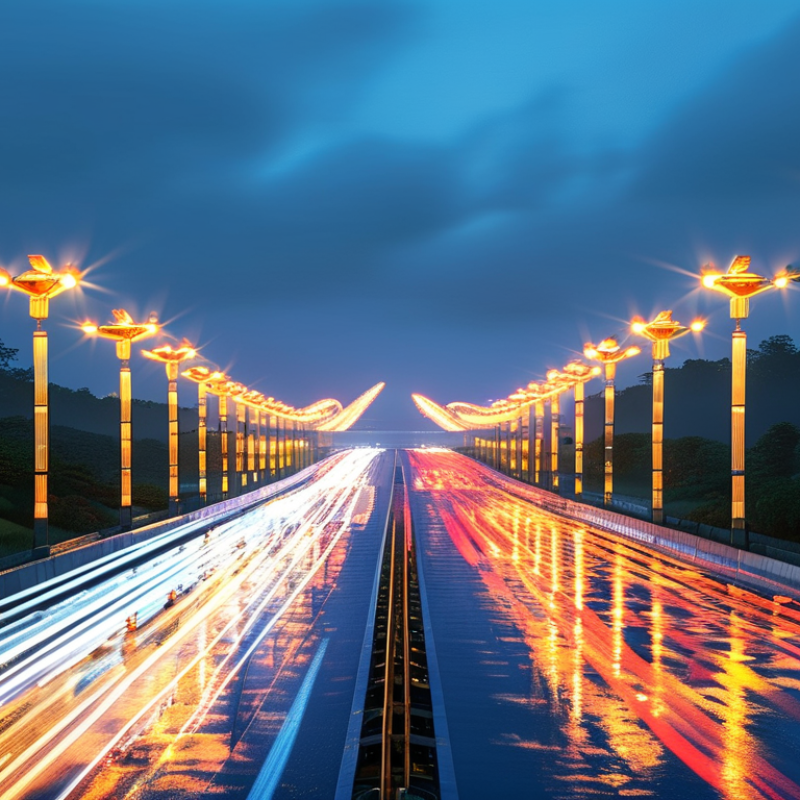
China’s highway lighting regulations define where, why, and how roadway lighting should be installed. Their scope covers expressways, interchanges, tunnels, service areas, toll approaches, and complex urban connections. The main purpose is safer movement at night, especially near ramps, curves, merging lanes, and pedestrian activity. Lighting is not treated as decoration. It supports visibility, traffic guidance, and timely hazard recognition.
Designers normally consider road classification, traffic speed, pavement reflection, weather, and surrounding brightness. They check average illumination, lighting uniformity, glare control, and visual comfort. A wet road can reflect light differently from a dry surface. That detail matters. Lighting plans should also protect drivers from sudden brightness changes when entering or leaving tunnels. Equipment placement must allow safe inspection, cleaning, repair, and emergency access. Energy performance and control systems are also important, particularly on long highway sections.
Implementation may involve national standards, transport-sector specifications, and local approval requirements. These layers can make the process less uniform than expected. A solution accepted in one region may need adjustment elsewhere. This is not necessarily a weakness, but it demands careful review. Engineers should confirm current requirements, conduct field measurements, and compare results with the approved design. In practice, a technically compliant layout may still feel uncomfortable if glare, shadows, or poor maintenance are overlooked. Regulations provide the framework; reliable operation depends on disciplined verification.
China’s top ten highway lighting regulations can be classified into four practical groups. Road planning covers highway classification, lighting zones, and installation locations. Optical performance includes illuminance, luminance, uniformity, glare control, and light color. Electrical protection addresses grounding, insulation, surge protection, and safe cabinet placement. Operations include intelligent control, energy efficiency, inspection, and maintenance. These requirements should be checked against current national standards, project specifications, and local road authority instructions.
On site, engineers may measure a dark interchange, a tunnel entrance, or a sharp curve at night. A lamp can appear bright while producing uneven pavement visibility. That assumption fails. Pole spacing, mounting height, beam angle, wet-road reflection, and nearby signs all affect driver comfort. Reliable design records should include photometric calculations, field measurements, cable tests, and maintenance access. In practice, maintenance access is often underestimated. It should not be.
Tips: Review lighting by road section, not only by average brightness. Check glare from approaching traffic. Confirm backup power for critical areas. Keep inspection dates, fault records, and cleaning results in one clear log. Recheck the design after construction, because real trees, barriers, and roadside dust may change performance. Some projects still rely too heavily on simulation. That deserves reflection.
The ten core requirements are classified into five practical domains used in highway lighting planning, design, construction, and operation. The values show the number of requirement areas assigned to each domain, not a compliance score.
China’s highway-lighting rules are best understood through ten practical checkpoints, especially illumination, uniformity, and glare control. Project teams should cross-check current highway specifications with CIE 115:2010 and relevant tunnel requirements, including JTG/T D70/2-01. Requirements vary by road class, speed, traffic volume, and location. A busy interchange needs stronger visual guidance than a low-volume rural section. Designers normally verify average illuminance or luminance, minimum uniformity, longitudinal uniformity, colour performance, maintenance factor, and lighting continuity.
Numbers alone can mislead. A pavement may meet average illuminance while hiding a dark 20-metre gap near a curve. At 80 km/h, that gap can delay hazard recognition. CIE 115:2010 therefore treats uniformity as a core visual-quality measure, not a decorative target. Glare control also requires attention to threshold increment, mounting height, aiming angle, shielding, and driver sight distance. Keep luminaires out of direct eye lines. This matters most near toll areas, ramps, tunnel entrances, and wet pavement.
Field evidence remains important. The U.S. Department of Energy’s 2020 roadway-lighting evaluations reported energy reductions of roughly 40–60% after efficient lighting upgrades, but savings depended on controls and operating schedules. That finding deserves caution. Lower wattage cannot justify poor visibility. Night inspections should include a driver’s-eye review, rain observations, camera checks, and recalibration after pavement changes. Real roads are imperfect. Standards still need practical judgment.
China’s highway lighting rules focus on equipment, installation, energy efficiency, and safety. Ten practical compliance checks cover photometric performance, electrical protection, pole strength, grounding, cable routing, glare control, visibility, maintenance, smart control, and acceptance testing. Designers commonly reference CJJ 45-2015 for road lighting and GB 50034 for lighting quality and energy-saving principles. Tunnel projects require additional technical controls under JTG/T D70/2-01.
Use certified luminaires with stable output, suitable ingress protection, and documented testing results. Install poles outside collision-risk zones where possible. Protect cables inside ducts, label circuits clearly, and test insulation before energizing. Ground metal structures continuously.
It sounds basic, but field records are often incomplete.
The International Energy Agency reports that lighting represents about 15% of global electricity use. Photocell control, dimming schedules, and adaptive brightness can reduce unnecessary operation. However, excessive dimming may weaken driver recognition during rain or fog.
A 2023 road-lighting assessment should therefore include measured illuminance, uniformity, glare, power demand, and fault response.
Maintenance teams need access routes, spare components, and inspection logs. Data from the China Energy Statistical Yearbook should support local energy benchmarks, although highway conditions differ considerably between regions. Testing remains more reliable than assumptions.
China’s highway lighting rules focus on safety, visibility, energy use, and accountable management. Project teams should follow approved national and local technical standards during design, construction, and operation. Ten recurring requirements shape practice: road classification, lighting levels, uniformity, glare control, pole safety, electrical protection, energy efficiency, inspection, maintenance records, and enforcement updates.
Inspection should cover illuminance, luminance, uniformity, cable insulation, grounding, control cabinets, and structural corrosion. Technicians can compare readings with approved design values and record equipment defects by location. Small details matter. A dark shoulder can hide debris. A loose access cover can expose workers to danger. Maintenance schedules should include cleaning, lamp replacement, storm checks, and emergency repairs. Records need dates, measurements, photographs, responsible personnel, and corrective deadlines.
Authorities may review construction permits, test reports, operating records, and energy performance. Nonconforming installations can require rectification before acceptance or during later supervision. Regulations and technical standards may change, so operators should check official government notices and local transport requirements regularly. Field experience shows that paperwork alone is not enough. Some teams record inspections carefully but overlook fading markings or tree growth near fixtures. That gap deserves review. Independent technical checks can improve reliability, especially after road widening, severe weather, or control-system upgrades.
: They cover expressways, interchanges, tunnels, service areas, toll approaches, and urban connections. Lighting matters most near ramps, curves, merging lanes, and pedestrian areas.
It helps drivers see hazards, road edges, signs, and changing traffic paths at night. Lighting is functional, not decorative. Poor visibility can delay a driver’s response.
Designers consider road class, vehicle speed, pavement reflection, weather, and surrounding brightness. Wet pavement may reflect light differently from dry pavement. That difference is easy to underestimate.
Engineers should check illuminance, luminance, uniformity, glare, and visual comfort. A bright lamp can still create dark pavement areas. Brightness alone is not enough.
Poles should avoid likely collision zones where practical. Cables need protected ducts, clear labels, and insulation testing. Metal structures require continuous grounding. Basic work, but records may be incomplete.
Photocells, dimming schedules, and adaptive controls can reduce unnecessary operation. However, excessive dimming may weaken visibility during rain or fog. Energy savings should not override safety.
Drivers need gradual brightness changes when entering or leaving tunnels. Sudden contrast can reduce visual comfort and hazard recognition. Tunnel transitions deserve separate review.
Records should include photometric calculations, field measurements, cable tests, cleaning results, faults, and inspection dates. Teams also need safe access and replacement components. Testing wins. Simulation alone may not reflect trees, dust, barriers, or wet roads.
China’s top 10 highway lighting regulations establish a practical framework for safe, efficient, and reliable road illumination. They define the scope and purpose of lighting on expressways, tunnels, interchanges, service areas, and other critical sections, while organizing requirements around visibility, traffic safety, environmental protection, and operational reliability. If you are asking, “what are the regulations for highway street lighting,” the core answer includes standards for illumination levels, lighting uniformity, glare limitation, appropriate color performance, and special treatment for curves, entrances, exits, bridges, and tunnels.
The regulations also address the selection, installation, protection, and electrical safety of lighting equipment. They encourage energy-efficient operation through suitable controls, scheduling, and system design, while requiring safe wiring, grounding, structural stability, and resistance to weather conditions. Regular inspection, cleaning, testing, fault repair, and performance evaluation are essential for ongoing compliance. Operators should maintain records, respond promptly to defects, and follow updated technical requirements as transportation needs, safety expectations, and energy-efficiency policies evolve.

Dorde Lights