Calculating power requirements for stage lighting is crucial for any successful production. Understanding how to calculate stage lighting power requirements can greatly impact the overall efficiency and safety of your event. Proper planning and knowledge allow for a seamless experience, ensuring all equipment functions optimally.
Many shows rely on various lighting fixtures, each demanding different power levels. Various factors, such as the wattage of each fixture and total fixture count, must be considered. Accurately assessing these elements helps prevent potential overloads. Ignoring power calculations could lead to serious technical failures or safety hazards.
While the principles behind these calculations are straightforward, practical application can be tricky. It requires attention to detail and an understanding of the venue's power supply. It's essential to review and reflect on your calculations regularly. Ensuring that you know how to calculate stage lighting power requirements is not just about numbers; it's about creating a visually stunning and safe environment for your audience.
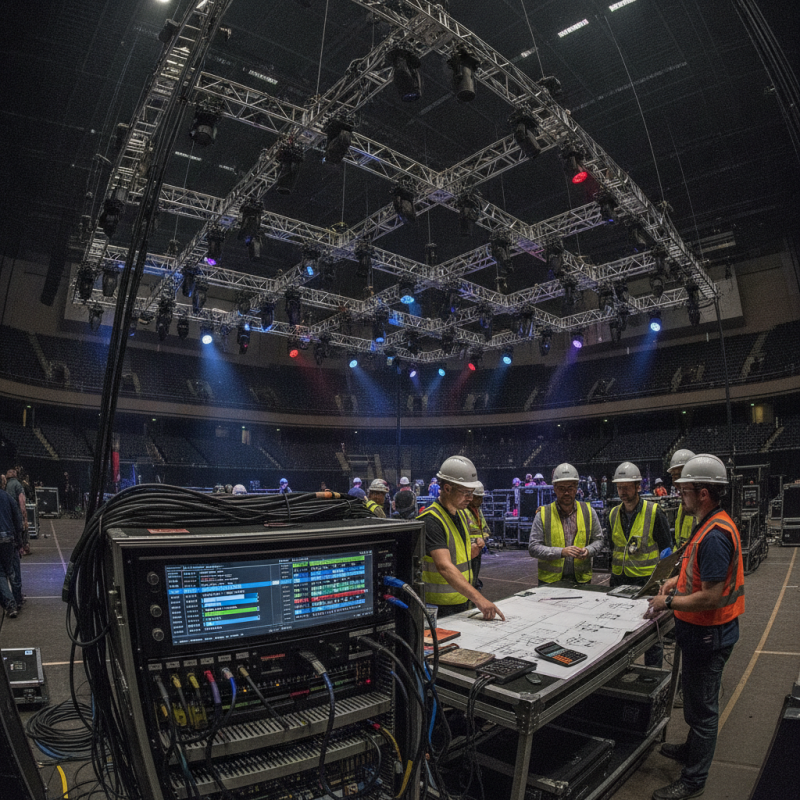
Understanding the basics of stage lighting power requirements is crucial for any production. The power needs can vary significantly depending on the type and number of lighting fixtures you use. Each light has a specific wattage that contributes to the total power requirement. It's essential to know how these numbers add up to avoid overload on your electrical circuits.
When planning your setup, consider the total wattage of all lights. Multiply the wattage of each fixture by the number of fixtures. Round up to ensure sufficient capacity. For instance, if you have eight 150-watt lights, your total will be 1,200 watts. Always account for additional equipment like dimmers and control boards, as they also draw power.
**Tips:** Always measure your available power supply. Calculate your requirements accurately. Install circuit breakers for added safety. If unsure, consult a qualified electrician for professional advice. This will help prevent mismatched power loads, protecting both your equipment and venue. Reflection on your setup can lead to better choices in lighting design and safety practices.
Choosing the right stage lighting fixtures is crucial for any performance. Each type of fixture has a specific wattage that affects overall power requirements. For instance, par cans typically range from 500 to 1000 watts. These fixtures are often used for general lighting. Their wattage impacts both the energy consumption and the heat produced on stage.
LED lights have gained popularity in recent years. They often range from 40 to 300 watts, making them energy-efficient options. However, the lower wattage means they may not provide the same intensity as traditional fixtures. It’s essential to consider the brightness needed for your production.
Other fixtures, like moving lights, can vary significantly in wattage. Some models might use 200 to 600 watts, while others can exceed 1200 watts. This variability means careful planning is necessary. You must assess the total wattage to avoid overloading circuits. Understanding each fixture's power requirements is vital for safety and performance success. Reflections on personal experiences can help in making informed choices.
Calculating total power consumption for multiple light fixtures is crucial for any stage lighting setup. Each light fixture has its own wattage rating. To estimate total power requirements, sum the wattages of all fixtures. For example, if you have ten 500-watt fixtures, the total power consumption would equal 5,000 watts. It’s essential to consider light dimmers and controllers, as they can affect the overall wattage.
According to industry reports, you should account for additional factors when calculating power needs. Fixtures often draw more power at startup than during normal operation. The National Fire Protection Association recommends adding a 20% buffer to your calculations. This accounts for inrush current and ensures your system runs smoothly, avoiding potential overloads.
It's important to verify your power source's capacity as well. Many venues have limited electrical infrastructure. Using a load calculator can provide insights into circuits and overall power limits. Assessing these aspects early on can prevent issues during performances. Quite often, setups fail due to underestimating the combined load. Inadequate power management might lead to unwanted interruptions or equipment damage.
Calculating power requirements for stage lighting involves more than just the sum of wattages. A crucial factor is the power factor (PF), a measure of how effectively electrical power is converted into useful work output. In lighting systems, PF can range from 0.7 to 0.95. A lower PF indicates that more power is being wasted, which can lead to increased energy costs and potential overheating in electrical equipment.
When planning your power needs, consider the PF along with the total wattage. For instance, if your lighting design features 10 fixtures, each drawing 300 watts, the total wattage is 3000 watts. If the PF of your system is only 0.8, the required apparent power (in volt-amperes) becomes 3750 VA. This shifting of numbers illustrates the importance of factoring in PF to avoid overloading circuits and ensure optimal performance.
Industry reports suggest that many live events underutilize their electrical resources. This can lead to unexpected costs and safety risks. Monitoring usage and adjusting the system for optimal PF can save money. Ensure that each component in your lighting setup is compatible with the others to maximize efficiency. Awareness of these details can help in making informed decisions that support better budgeting and reliability in stage setups.
When setting up stage lighting, selecting the right circuit and breaker is crucial. It involves understanding the power requirements of your equipment. Each lighting fixture has specific wattage, and you must ensure your circuit can handle that load. Common practice suggests allocating about 80% of the circuit's capacity to maintain safety. This helps you avoid tripping breakers during performances.
Consider the total wattage of your lights. For example, if using ten 200-watt fixtures, that’s 2000 watts. With a 20-amp circuit at 120 volts, the maximum output is 2400 watts. Therefore, your total wattage stays well within the limit. But, remember to account for additional components like dimmers or controllers. They can add load and potentially trip circuits if not properly calculated.
The type of breaker is equally important. Standard breakers might suffice, but using GFCI breakers can prevent electrical shocks. It's best to analyze your specific needs. Sometimes, planning falls short. You might discover your circuit can't support all your planned fixtures. This necessitates adjusting your lighting design. Thoughtful consideration of these aspects enhances overall safety and performance.
: It ensures safe and efficient operation during productions. Each fixture has specific wattage to consider.
Multiply the wattage of each fixture by the number of fixtures, then sum them.
Consider reducing fixtures or reevaluating power capacity. Underestimating can cause overloads.
Dimmers and control boards draw power, affecting total requirements. Ignoring them risks system failure.
It accounts for inrush current at startup, ensuring your setup runs smoothly without overload.
Review your venue’s electrical infrastructure and use a load calculator for insights on circuits.
It can lead to interruptions or equipment damage during performances, impacting overall success.
They can provide professional advice and help prevent mismatched power loads, ensuring safety.
Yes, reflecting can lead to better lighting design and safety practices, benefiting future productions.
Yes, miscalculations can cause equipment failure or unsafe conditions, potentially endangering performances.
Understanding how to calculate stage lighting power requirements is crucial for any event production. This process begins with a fundamental comprehension of power needs, where one must identify different types of stage lighting fixtures and their respective wattages. Each fixture contributes to the total power consumption, which is essential for planning multiple light setups.
Next, it’s important to factor in the power factor when performing calculations, as it influences the effective power consumption. Finally, selecting the appropriate circuit and breaker is vital to ensure safety and functionality in the lighting setup. By following these steps, you can confidently determine how to calculate stage lighting power requirements for a successful event.

Dorde Lights